
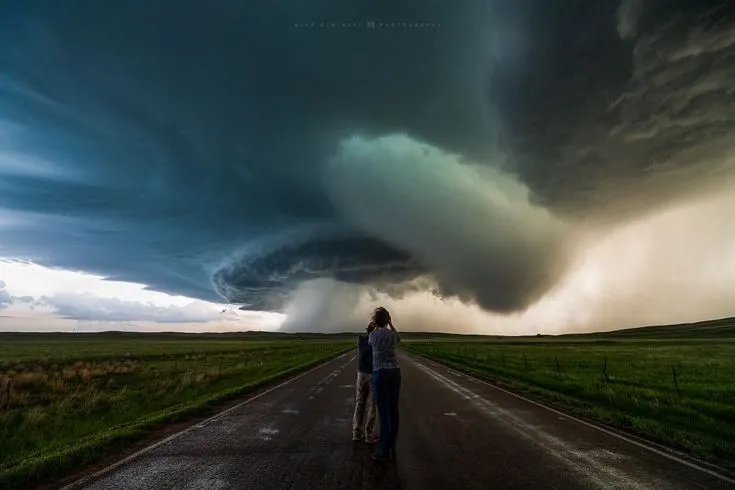
A powerful storm photograph is rarely about the clouds alone. The landscape beneath them often gives the image its scale, atmosphere and sense of place. Travelers considering Kansas storm chasing tours 2027 have an opportunity to photograph more than severe weather. Open farmland, distant roads, changing light, and broad horizons can become equally important parts of the visual story.
This approach makes storm photography especially rewarding for travelers who enjoy landscapes. Rather than waiting for one spectacular weather event, photographers can document how the character of the Plains changes throughout the day. A quiet morning scene and a dramatic evening sky may look completely different even when photographed only hours apart.
Let the Landscape Establish the Setting
Large storms become easier to understand visually when something familiar appears beneath them. A field, road, fence, or distant structure can demonstrate just how much of the sky a developing thunderstorm occupies. Landscape elements also prevent every photograph from becoming another isolated image of clouds.
Including the surroundings tells viewers where the experience took place and creates a stronger sense of traveling through the Plains rather than simply watching weather from an unspecified location.
Roads Can Create Strong Compositions
Long rural roads are a distinctive feature of many Plains landscapes. From an appropriate stopping location, they can provide natural lines that lead the viewer’s attention toward the horizon. Photographers do not need complicated compositions. A simple road beneath developing clouds can communicate distance, movement, and the scale of the sky effectively.
Safety must remain the priority, so photographs should only be taken from suitable locations and according to guide instructions rather than by stepping into active roadways.
Fields Change With the Light
Agricultural landscapes may appear visually simple at first, but changing weather can transform them quickly. Sunlight breaking through clouds can illuminate one field while another remains in shadow. Dark storm clouds behind brighter vegetation can create strong contrast without requiring dramatic editing.
Travelers who periodically look away from the main storm may discover that some of the most interesting light is occurring elsewhere across the landscape.
Wide Views Work Well With Large Storms
People researching tornado tours 2027 Kansas may naturally imagine close photographs of dramatic weather. Wider compositions, however, can sometimes communicate the experience more effectively.
Large cloud structures need visual space. Photographing too tightly can remove the surrounding features that show their scale.
A wide image can include several useful elements:
-
The storm structure
-
Open farmland
-
A visible horizon
-
Interesting foreground details
-
Changing areas of light
-
Rainfall in the distance
Combining these features can create a photograph that feels more complete than focusing on one cloud detail.
Small Towns Add Human Context
Storm-chasing routes may pass through communities that rarely appear in mainstream travel photography. These places can add another dimension to a photographic collection.
A distant water tower, grain elevator, roadside building, or town skyline beneath changing skies can connect weather with everyday life on the Plains.
These images should be approached respectfully. The goal is to document the journey and landscape rather than treat local communities merely as photographic props.
Photograph the Quiet Parts of the Day
Not every memorable image needs severe weather in it. Morning roads, open horizons, developing cumulus clouds, and calm rural landscapes can establish the beginning of the day’s visual story.
Photographing quieter conditions also creates useful contrast.
When travelers later review their images, they can see how dramatically the environment changed rather than having a folder containing only photographs taken during the most active hour.
Watch What Happens After the Main Storm
The end of active chasing does not necessarily mean the end of good photography. Departing storms can leave behind unusual cloud formations, distant rain, changing colors, or dramatic evening light.
Sunset can be particularly interesting when portions of the western sky begin clearing.
Instead of immediately putting the camera away, photographers can remain observant while still following all travel and safety instructions. The final photograph of the day may look completely different from the storm images captured earlier.
Build a Collection Rather Than Chase One Image
Returning home with one dramatic photograph is satisfying, but a varied collection often communicates the journey better.
Wide landscapes, cloud details, roads, communities, changing light, storm structure, and quieter moments can work together as a sequence. Travelers can even arrange photographs chronologically to show how a chase day developed.
This storytelling approach also reduces pressure to capture one supposedly perfect weather moment.
Conclusion
Storm photography across the Great Plains becomes richer when the landscape receives as much attention as the sky. Roads, farmland, distant communities, changing light, and wide horizons provide context that helps viewers understand both the scale of the weather and the character of the region.
A journey with Storm Chasing Adventure Tours can give photography-minded travelers a varied canvas where landscapes and evolving skies come together to tell a different visual story each day.