
Perched high in the Eastern Himalayas, Bhutan is a nation where spirituality is not a relic of the past but a living force shaping everyday life. Known for prioritizing Gross National Happiness over purely economic metrics, the country’s identity is deeply anchored in its monastic institutions and rich cultural traditions. The monastery in Bhutan is not merely a religious structure; it is a center of governance, education, ritual life, and community cohesion. Similarly, culture in Bhutan is not confined to festivals and costumes—it is woven into social conduct, architecture, governance, and national philosophy.
This article explores how monasteries serve as the spiritual backbone of Bhutan and how the country’s cultural framework sustains its unique identity in a rapidly modernizing world.
Monastery in Bhutan: Architecture, Faith, and Function
1. Spiritual Foundations
Bhutan practices Vajrayana Buddhism, a branch of Mahayana Buddhism introduced in the 8th century by Guru Rinpoche (Padmasambhava). He is revered as the spiritual figure who subdued local spirits and established Buddhism in the region. Monasteries were built not only as places of meditation but as sacred fortresses protecting spiritual knowledge.
Monastic life follows structured discipline, ritual practice, meditation, and scholastic training. Young boys often join monasteries to receive religious education, preserving sacred texts, chants, and ceremonial arts that have been transmitted for centuries.
2. Paro Taktsang (Tiger’s Nest Monastery)
One of the most iconic monasteries in the world, Paro Taktsang, commonly called Tiger’s Nest, clings dramatically to a cliff 3,000 feet above the Paro Valley. According to legend, Guru Rinpoche flew to this cave on the back of a tigress to meditate and subdue negative forces.
Architecturally, the monastery is a masterpiece of Himalayan engineering. Built in 1692, it integrates seamlessly into the cliffside rock face. Pilgrims undertake a demanding hike to reach it, symbolizing spiritual ascent and purification.
Beyond its visual grandeur, Paro Taktsang represents the spiritual determination of the Bhutanese people—faith carved into stone.
3. Punakha Dzong: The Palace of Great Happiness
Another magnificent structure is Punakha Dzong, also known as the Palace of Great Happiness. Constructed in 1637 by Zhabdrung Ngawang Namgyal, it sits at the confluence of the Pho Chhu and Mo Chhu rivers.
Unlike ordinary monasteries, dzongs function both as monastic centers and administrative headquarters. Punakha Dzong historically served as the seat of government and remains the winter residence of Bhutan’s monastic body.
Its massive whitewashed walls, intricately carved wooden windows, and golden spires exemplify traditional Bhutanese architecture—designed without nails and built to withstand earthquakes.
4. Role of Monasteries in Society
Monasteries in Bhutan perform multiple societal roles:
- Religious ceremonies: Hosting rituals for harvests, protection, and community welfare.
- Education: Training monks in Buddhist philosophy, astrology, traditional medicine, and arts.
- Cultural preservation: Safeguarding ancient scriptures and sacred dances.
- Community leadership: Offering moral guidance and spiritual counseling.
The Central Monastic Body, led by the Je Khenpo (Chief Abbot), plays a respected role within Bhutan’s constitutional monarchy. This reflects how religion and governance coexist harmoniously
Culture in Bhutan: Tradition as a Way of Life
If monasteries form Bhutan’s spiritual framework, culture forms its social fabric. Culture in Bhutan is preserved not by accident but by policy and collective commitment.
1. National Dress and Identity
Bhutanese citizens wear traditional dress as part of national etiquette. Men wear the Gho, a knee-length robe tied at the waist, while women wear the Kira, an ankle-length dress paired with a jacket called Toego.
This dress code is mandatory in government offices, schools, and formal events. Rather than being restrictive, it reinforces unity and cultural pride. The woven patterns reflect regional identities and family heritage.
2. Festivals and Tshechus
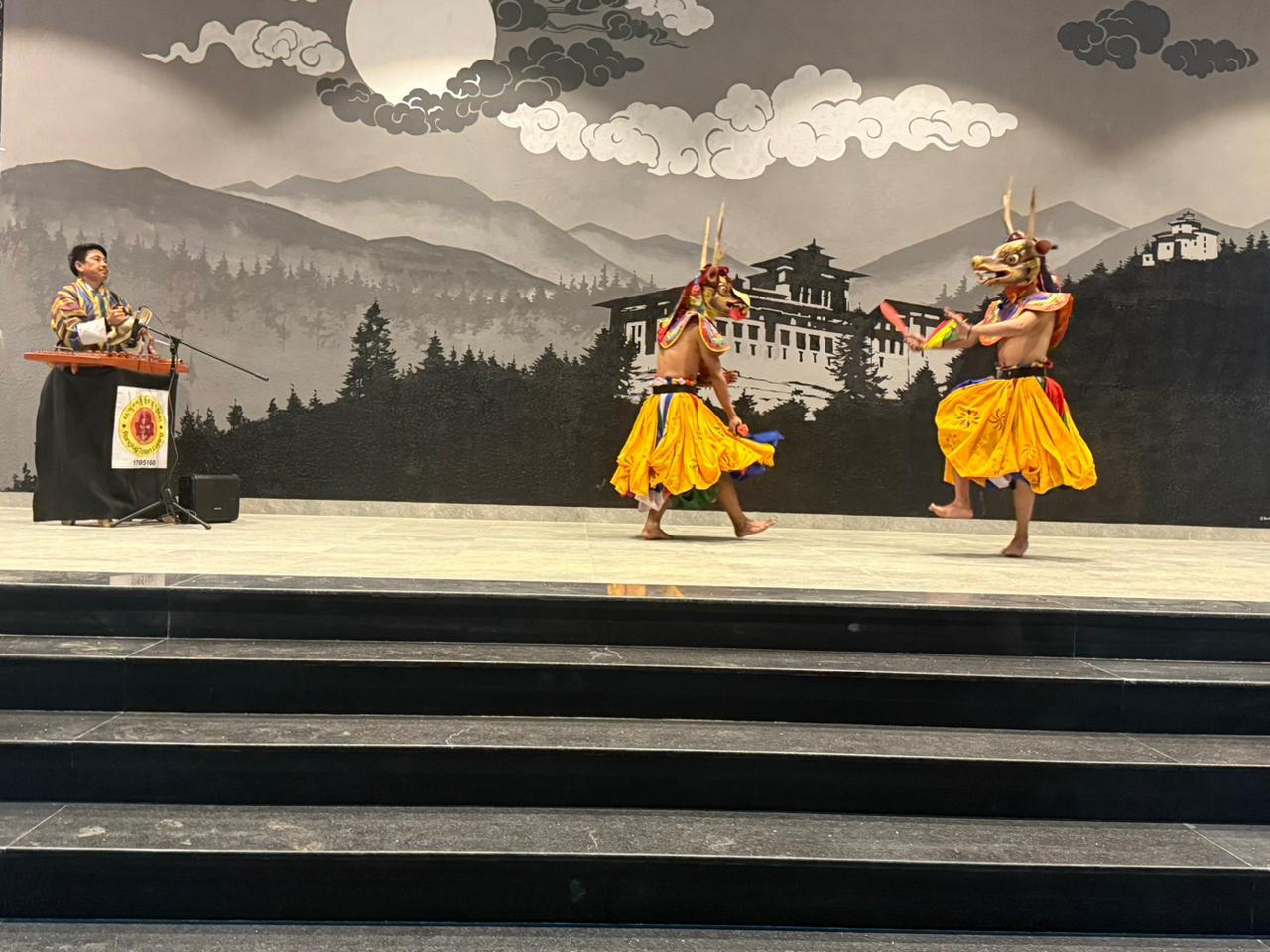
Religious festivals, known as Tshechus, are central to culture in Bhutan. These annual events commemorate Guru Rinpoche and feature sacred mask dances called Cham.
Monks and lay performers wear elaborate costumes representing deities, demons, and historical figures. The dances are not mere entertainment; they are believed to confer spiritual blessings and cleanse negative karma for those who witness them.
Tshechus also function as social gatherings, strengthening community bonds and transmitting oral traditions.
3. Language and Literature
The national language, Dzongkha, is used in administration and education. Classical Tibetan script is preserved in religious texts. Oral storytelling, folktales, and proverbs play a significant role in preserving moral values.
Monasteries contribute to literary continuity by safeguarding centuries-old manuscripts and promoting scholastic debate traditions.
4. Arts and Crafts (Zorig Chusum)
Bhutan officially recognizes thirteen traditional arts and crafts, collectively called Zorig Chusum. These include painting (thangka), wood carving, embroidery, weaving, and sculpture.
Thangka paintings, often depicting Buddhist deities, are used in meditation and festivals. Skilled artisans undergo years of training to master symbolic proportions and sacred geometry.
This institutional preservation ensures artistic authenticity rather than commercialization.
5. Architecture and Environmental Harmony
Bhutanese buildings follow strict architectural guidelines to maintain traditional aesthetics. Even modern structures feature sloping roofs, ornate windows, and symbolic motifs.
The government mandates forest conservation, keeping over 70% of the country under forest cover. Environmental preservation is not merely ecological—it is spiritual, rooted in Buddhist respect for all living beings.
Interconnection Between Monastery and Culture
The monastery in Bhutan is not isolated from daily life; it is central to it. Festivals originate from monastic traditions. Art forms are inspired by Buddhist symbolism. Moral codes are shaped by spiritual teachings.
For example:
- Mask dances performed at festivals are choreographed and preserved by monks.
- Traditional music uses instruments played during monastic rituals.
- Cultural values such as compassion and harmony derive from Buddhist philosophy.
This interdependence creates a cohesive national identity rarely seen in modern states.
Modern Challenges and Preservation
Bhutan faces pressures from globalization, tourism, and digital influence. Yet, the government balances development with cultural integrity.
Tourism operates under a “High Value, Low Impact” model to prevent cultural erosion. Schools integrate modern education with traditional teachings. Urban development adheres to architectural codes reflecting monastic design principles.
Rather than resisting change, Bhutan filters modernization through its cultural lens.
Conclusion
The monastery in Bhutan stands as a symbol of enduring faith, architectural mastery, and spiritual resilience. From the breathtaking heights of Paro Taktsang to the grandeur of Punakha Dzong, these sacred institutions form the spiritual backbone of the nation.
Meanwhile, culture in Bhutan thrives through dress, festivals, arts, language, and environmental stewardship. It is a deliberate, living system preserved through policy and collective participation.
Together, monasteries and cultural traditions shape Bhutan into more than a geographical entity—they define it as a civilization rooted in spiritual consciousness and communal harmony
